
Homebuyer survey advice · Damp & timber reports · England & Wales
High Damp Readings on a HomeBuyer Report: Should I Still Buy?
Don’t automatically walk away from a property because the survey mentions damp. First establish what the readings actually mean.
It can be unsettling to receive a HomeBuyer Report or mortgage valuation saying there are “high damp readings”, particularly if you did not see any damp when viewing the house. But an elevated reading is a warning to investigate — not a confirmed diagnosis of rising damp, an unsafe building or an expensive repair.
DampServe carries out paid professional damp and timber surveys with written reports so buyers can understand the likely moisture source, any timber damage and the next steps before deciding whether to proceed.
A high reading is not the same as a failed damp-proof course. Damp might be caused by condensation, penetrating rain, a leak, salts, high external ground levels, bridged plaster, or another defect. We investigate the evidence before suggesting treatment.

A specialist report can clarify a damp concern raised during the purchase process before you commit to repair costs or change your plans.
Read this before making a decision
Four things high damp readings do — and don’t — tell you
The reading needs interpreting in the context of the whole building, not on its own.
A reading is a clue
A handheld meter can highlight areas requiring investigation, but it does not by itself identify the moisture source.
Not every issue is rising damp
Condensation, leaks, penetrating damp, salts and bridged ground levels may produce similar warning signs.
Severity can vary
A localised maintenance defect and widespread timber decay can lead to very different repair costs and decisions.
A report helps you decide
Written findings can help you assess risk, budget for genuine repairs, discuss concerns with your solicitor or negotiate.
Why has this appeared on my report?
What do “high damp readings” actually mean?
Homebuyer and mortgage surveyors frequently use electrical moisture meters as part of a broader inspection. These devices can be useful for locating areas that deserve further investigation, but readings taken on plaster or masonry are not laboratory measurements of water content. Salts and some materials can influence the response.
The report may say “possible damp”, “high moisture readings” or “instruct a specialist damp and timber surveyor”. The wording is a request for clarification, not proof that the property is defective or that a chemical damp-proof course is required.
Common explanations worth checking
- Condensation: humid indoor air meeting cold surfaces or restricted ventilation.
- Penetrating damp: gutters, roofs, pointing, render, windows or rainwater defects.
- Leaks: plumbing, drains or water ingress from a localised fault.
- Bridging: raised ground levels, render or plaster bypassing an existing DPC.
- Historic moisture or salts: previous problems or contaminated plaster affecting readings.
- Rising damp: a possibility where the wider evidence supports it, not the default assumption.
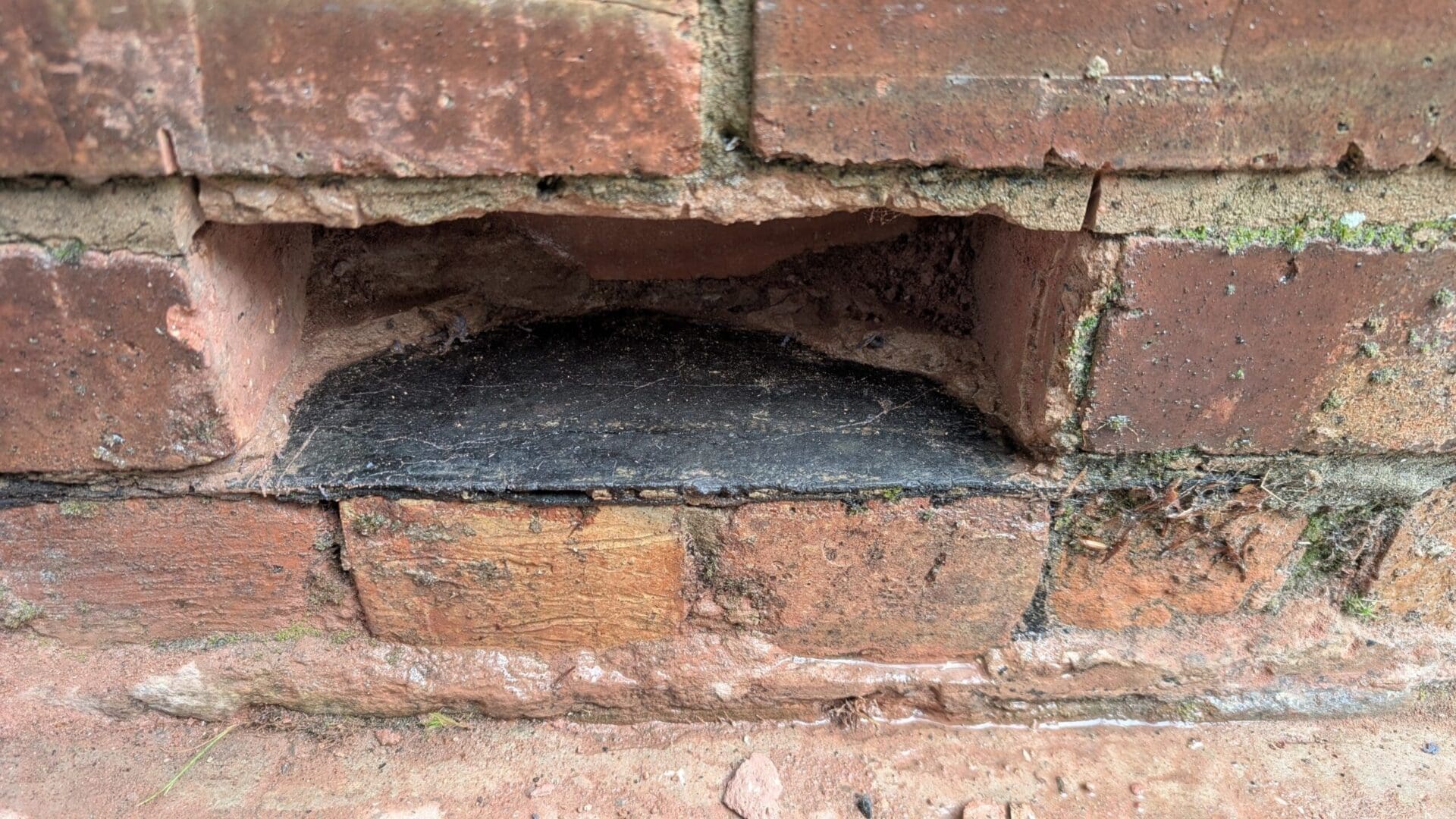
Existing physical damp-proof courses may still be effective. Their presence, any bridging and other moisture sources need considering before injection work is proposed.
See our photographed examples of unnecessary new damp-proof courses and why correct diagnosis matters.
A sensible buying decision
Should you still buy a house with damp mentioned on the survey?
Potentially, yes — but make the decision after understanding what is affected and what needs doing, not just the wording of the first report.
01
Investigate
Arrange a specialist damp and timber survey covering the areas of concern and any accessible at-risk timbers.
02
Understand the cause
Ask whether the moisture is active, historic, localised or linked to a wider defect — and what evidence supports the diagnosis.
03
Check the financial exposure
Consider genuine repairs, timber condition, access restrictions and the cost or disruption of remedial work.
04
Decide with the facts
Use the written report with your solicitor, surveyor and lender. You may proceed, renegotiate, request repairs or decide the risk is too high.
When damp might be relatively straightforward
Some reports lead to findings such as a leaking downpipe, an isolated condensation problem, an external ground level that needs attention or a past issue that is now dry. These may be manageable, but the property still needs inspecting to confirm the facts.
Where no major damp or timber defect is found, your written report should make that clear. You should not be asked to pay for a standard chemical DPC package simply because a meter registered a high reading.
When to investigate more carefully
Widespread moisture, persistent water ingress, decay in structural timbers, wet or dry rot, substantial hidden areas or unresolved defects can have larger financial and practical implications. The purchase may still be possible, but the risks should be understood.
Your survey should identify what was accessible, what could not be inspected, whether further investigation is needed and what work is genuinely recommended.
What you are paying for
What will DampServe inspect and put in the report?
Subject to the agreed scope and safe access, our specialist survey may assess:
- Accessible affected walls, moisture patterns and finishes
- External walls, rainwater goods, ground levels and possible bridging
- Condensation, ventilation and other moisture sources
- Accessible roof, floor and joinery timbers where included
- Evidence of woodworm, wet rot, dry rot or moisture-related damage
- Appropriate readings, observations and photographs
- Likely causes, practical recommendations and survey limitations
A written report you can act on
After the inspection, you receive a professional written report setting out the findings, relevant observations and recommended next steps. This helps you understand what the initial high readings actually mean rather than relying on a generic instruction to obtain damp treatment.
Standard paid reports normally include a quotation for work DampServe recommends where appropriate. There is no obligation to instruct us to undertake that work.
If you prefer a report without any treatment quotation, specifically request our independent report-only survey. With that service, quotations are provided only if requested.
If your lender has specified a particular report format or wording, send us their instructions before booking. Acceptance remains the lender’s decision.
Avoid paying for the wrong solution
Why we don’t automatically recommend a new damp-proof course
DampServe also carries out appropriate remedial treatment, but a high meter reading or damp stain is not enough to conclude that a chemical injection is needed. An existing physical damp-proof course can still be doing its job while another defect allows moisture into the building.
Our paid inspection is designed to establish the likely problem before advising on repairs. If the evidence does not justify specialist treatment, we will say so. If work is necessary, the report should explain why and what it is intended to fix.
We have investigated properties where an earlier recommendation for rising damp treatment did not address the actual cause. See our real DPC photographs and case studies for examples.
Questions to ask before accepting a damp-treatment quotation
- What is the evidence for the diagnosis?
- Has the original DPC been identified and checked?
- Have condensation, leaks and penetrating damp been considered?
- Are raised ground levels or bridged plaster involved?
- Will the proposed work deal with the moisture source?
- What repairs, costs and limitations are explained in writing?
Can you negotiate the price after a damp report?
Sometimes. A specialist report can help a buyer understand the likely scope and cost of repairs. If there is a genuine defect, you may choose to discuss a price adjustment or ask the seller to address it before completion. Neither outcome is automatic; agree your approach with your solicitor or conveyancer.
A survey can also help prevent overreacting to a minor or historic issue that does not justify major work.
Who pays for the specialist survey?
The buyer or seller may commission and pay for the survey, depending on their agreement. Buyers often arrange it for their own due diligence or a lender’s request; sellers sometimes commission one to clarify a reported concern before further viewings or negotiations.
If the report is required for mortgage purposes, check who must instruct the survey and whether the lender has any conditions before booking.
Homebuyer damp survey FAQs
Questions buyers ask before proceeding
If your survey has identified possible damp or timber defects, these are the questions worth answering before exchange.
Need a more detailed answer? Visit the full damp and timber FAQ hub.
High readings alone do not automatically make a property a bad purchase. Arrange a specialist survey to identify the cause, scale of any damage and likely repair costs before deciding.
No. Readings taken on plaster and masonry can be affected by salts and other factors. They need to be considered alongside building construction, damp patterns and other evidence.
A valuer or building surveyor may have noted a possible moisture or timber concern and wants a specialist assessment. Sometimes it is a precaution rather than evidence of a serious defect. Follow the lender’s precise instructions.
The lender makes its own lending decision. A specialist report can clarify conditions and the scale of any necessary repairs but cannot guarantee approval or acceptance.
Not unless the evidence genuinely supports that treatment. Condensation, leaking rainwater goods, raised external ground or DPC bridging may require very different repairs.
Fees depend on the property, location, access and scope. DampServe provides a quotation for the survey before booking. See the damp and timber report cost page for details.
Accessible timbers can be assessed under the agreed survey scope. The report should explain whether insect activity or fungal decay appears present and what further action, if any, is justified.
Yes, if buyer and seller agree. Who commissions and pays is a matter for the parties; the buyer and lender should confirm whether the resulting report meets their needs.
Our standard paid survey reports normally include a quotation for genuinely recommended work where appropriate. The separate independent report-only survey excludes treatment quotations unless specifically requested.
It may help you understand defects and reasonable repair costs for discussion with the seller and your solicitor. There is no automatic entitlement to a price reduction.
Moisture behaviour varies by construction and conditions. An old house may have historic salts or other factors influencing readings, but visible persistent damp should still be investigated rather than dismissed.
A free visit may be a legitimate treatment quotation service, but it is not necessarily equivalent to a paid diagnosis-led inspection and professional written report. Ask what is included and how the provider is paid.
Related DampServe advice
Useful pages for homebuyers
Keep researching the issue before committing to a purchase or an unnecessary repair.
Know what you are buying
Concerned by high damp readings on your HomeBuyer Report?
Get a professional damp and timber inspection and a clear written report before accepting a costly treatment quote or walking away from a property you otherwise want.