
SURVEYS • WRITTEN REPORTS • REAL ANSWERS
Damp & Timber Survey FAQs: Costs, Reports, Damp, Mould & Woodworm
Clear answers to the questions homeowners, homebuyers, sellers and landlords ask before booking a specialist damp and timber survey.
Not sure whether you need a damp report, why a mortgage valuer has mentioned moisture, or whether a damp wall really needs expensive treatment? Start here. We explain what surveys cover, what goes into the written report and how the right diagnosis can prevent unnecessary work.
We inspect first — and recommend treatment only where it is justified. DampServe charges for professional surveys and produces written findings. A standard survey report normally includes a quotation for recommended remedial work. If you book our dedicated independent report-only survey, no treatment quotation is included unless you request one. There is never an obligation to instruct treatments.
Want to see how prices work? Read our survey and report cost guide.

The written diagnosis is the service you are paying for — not simply an estimate for treatment.
A survey with a purpose
We examine accessible evidence and explain likely causes instead of treating every damp reading as rising damp.
Reports you can understand
Clear written findings, relevant photographs, recommendations and any important access limitations.
No pressure to book repairs
Treatment is only recommended when justified, and you are free to decide who carries out any works.
FIND YOUR ANSWER
Browse Damp & Timber Questions by Topic
These are practical answers to common UK damp survey, mortgage report, rising damp, woodworm and mould questions. Expand any question to read the explanation.
01 / 05 · Expert FAQs
Surveys, costs & written reports
Start here if you are unsure what you are paying for, what the surveyor checks, or what the report actually says.
A damp and timber survey is a specialist inspection of accessible areas to investigate moisture problems and the condition of relevant timber. Depending on the agreed scope, we look for condensation, penetrating damp, suspected rising damp, leaks, high ground levels, woodworm, wet rot, dry rot and associated defects. The purpose is to explain what is happening and what, if anything, needs doing. See our damp and timber survey service.
Your written report explains the areas inspected, observations, likely causes, relevant moisture readings, photographs where useful, access limitations and practical recommendations. A sketch or site plan may be included where appropriate to the scope. Standard DampServe reports normally include a quotation for any remedial work we recommend; if no work is required, we say so. A dedicated independent report-only survey has no treatment quotation unless you request one.
A damp-focused inspection concentrates on moisture in walls and associated building defects. A damp and timber survey also considers accessible timbers for wood-boring insects and fungal decay, within the scope agreed. If a lender has asked for both damp and timber observations, tell us before booking so the inspection matches the instruction.
Price depends on the property size, location, access, whether it is damp-only or damp-and-timber, and how detailed the written reporting needs to be. As a broad guide, domestic surveys may be around £190–£490+, while large, unusual and commercial properties can cost more. These are indicative figures rather than a fixed price: ask DampServe for a current quotation before booking. See damp and timber report costs.
That depends on the reason for the inspection. A targeted investigation may be suitable for a localised damp problem. A mortgage, pre-purchase or damp and timber report may require a broader agreed scope. Let us know what your lender, surveyor or adviser has requested so we can recommend the appropriate survey rather than guessing.
We assess accessible areas relevant to the agreed inspection. Roof voids, sub-floor areas or concealed timbers can be subject to access, safety, stored belongings, floor coverings and other limitations. A standard visual survey does not mean lifting every floorboard or opening walls. Restrictions are explained in the report, with further investigation recommended if evidence makes it necessary.
Both depend on property size, condition, access and reporting requirements. A small targeted investigation is different from a large property or commercial survey. Tell us your deadline when enquiring and we will explain available appointments and the expected report delivery arrangements before you instruct us.
That is a legitimate and useful result. A paid survey does not have to produce a treatment recommendation. If accessible areas show no significant concern, the report will record the findings and any relevant limitations. We do not recommend chemical damp-proofing, woodworm treatment or other works merely to justify the survey fee.
02 / 05 · Expert FAQs
Mortgage, homebuyer & independent surveys
Questions buyers, sellers and homeowners often ask after seeing a valuation note or being told that a specialist report is required.
A valuation or building survey may mention damp readings, historic moisture, suspicious timber or areas that were not fully assessed. The lender or valuer may want a specialist to investigate before making a lending decision. A request for a report does not automatically mean major damp has been found. You can send us the relevant wording before booking. See our pre-purchase and mortgage survey page.
Not necessarily. An elevated electrical moisture-meter reading is an indication that needs interpreting, not a diagnosis by itself. Salts, material type, condensation, leaks and other factors can influence readings. The specialist inspection looks at the pattern, construction, visible evidence and likely sources before recommending action.
We prepare professional written reports for mortgage and property-related enquiries, but acceptance is decided by the individual lender or its valuer. Some parties have specific scope, qualifications or wording requirements. Send their instructions before booking so we can confirm what we can provide; no company can guarantee acceptance by every lender.
For DampServe, the independent service means you are paying for an evidence-led inspection and written report, not a visit to look for treatment work. It explains what was found, the probable cause, any uncertainty and the recommended next steps. DampServe also provides repairs and treatments, but the report-only option is not tied to instructing those services. Read what you receive from an independent survey.
With a standard DampServe survey: where remedial treatment or repair is recommended, the written report normally includes a quotation for the appropriate works. With the dedicated independent report-only survey: no treatment quotation is provided unless you specifically ask for one. In either case, there is no obligation to instruct DampServe to carry out any repairs.
Not always. A free inspection may be intended mainly to assess or price treatment, while a paid diagnostic survey is commissioned to investigate and document the property’s condition. Both may have their place; the important questions are what will actually be inspected, whether a written diagnosis is included, and whether the service meets your lender’s instructions. See free versus paid damp surveys.
There is no universal rule. The buyer, seller or another party can commission and pay for it, depending on what has been agreed and why the report is needed. If a lender requests the inspection, clarify who must instruct the survey and who should receive the report. Agree access with the occupier or estate agent in advance.
Equity release valuations sometimes request specialist clarification even where the homeowner is unaware of a problem. That can be confusing, but the request alone does not prove that damp or timber decay exists. We inspect and report what is actually found; we do not attend to create treatment work. See equity release damp and timber reports.
Yes, subject to the seller’s permission and access. Many buyers want a specialist report before committing to a purchase or deciding how to respond to a surveyor’s observations. Give us the relevant building-survey notes and your transaction timescale so the scope and report can be agreed appropriately.
03 / 05 · Expert FAQs
Damp, rising damp, condensation & mould
A diagnosis is more useful than a guess based on a black mark, a musty smell or a moisture-meter reading.
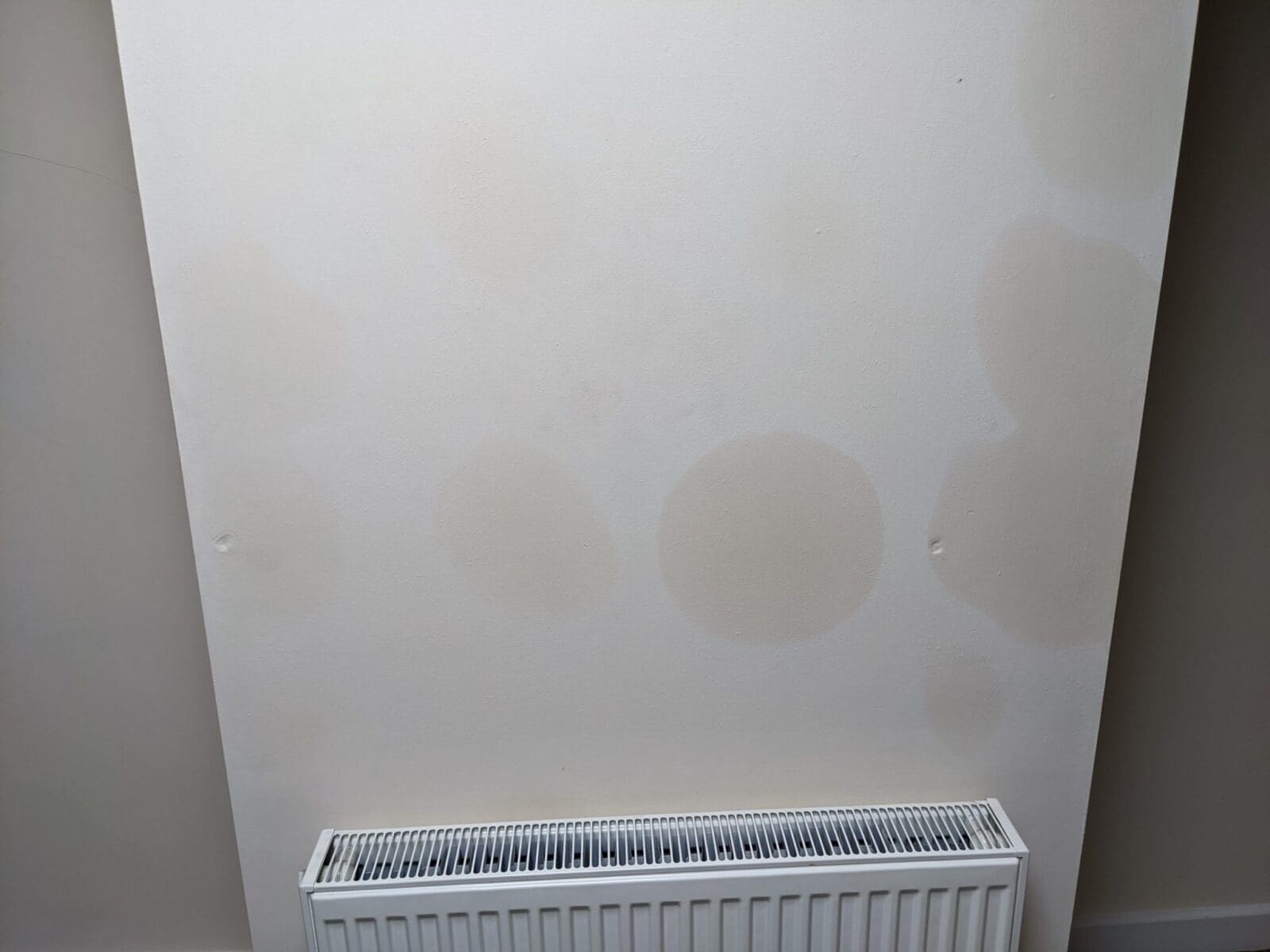
A visible damp patch needs investigation of the cause — not just a meter reading.
Condensation occurs when moisture-laden indoor air meets cold surfaces. Penetrating damp involves water entering through defects such as roofs, pointing or gutters. Rising damp involves ground moisture moving up masonry. Symptoms can overlap or occur together, so location and staining alone cannot reliably identify the cause. Our condensation, penetrating damp and rising damp pages explain the differences.
No. A moisture meter can help indicate and compare areas of concern, but readings must be interpreted with the material, salts, building construction and other evidence. A meter displaying a high reading is not enough on its own to diagnose rising damp or justify a chemical damp-proof course. The RICS consumer guidance on damp and mould also explains why a meter reading alone is not a diagnosis.
It can occur in suitable circumstances, but low-level staining does not automatically mean ground moisture is rising through the wall. High paths, bridged damp-proof courses, leaking pipes, condensation, rainwater defects and historic salts should also be considered. Read the damp-proof course and rising damp myth for a fuller explanation.
Older solid-wall buildings often use permeable brick, stone and lime-based materials that absorb and release moisture differently from modern cavity-wall construction. Failed rainwater goods, unsuitable impermeable finishes, ground levels and reduced ventilation can all contribute. Diagnosis and repairs should respect the building’s materials. See Cadw guidance on investigating moisture in traditional buildings.
No. A new or injected damp-proof course should only be recommended if the diagnosis supports it. Where an existing DPC has been bridged by external ground levels, plaster, render or debris, removing the cause may be more appropriate. We explain the reasoning behind any proposed damp-proofing treatment.
Rain-related staining can point towards penetrating damp, overflowing gutters, defective roofs, cracked render, failed pointing or leaking seals. It can also be affected by how a wall dries. Record when the patch appears and inspect accessible external features, but do not assume the cause without an assessment.
Cleaning addresses visible growth but may not remove the moisture conditions that allowed it to develop. The longer-term solution may involve fixing leaks, improving extraction and heating, addressing cold bridges or repairing building defects. UK government guidance emphasises dealing with the underlying causes, rather than surface cleaning alone. See mould survey and treatment advice.
No. Mould usually needs persistent moisture, which can arise from condensation, a leak, penetrating damp, poor insulation or more than one factor. The colour alone does not tell you the source or the health risk. Larger, recurrent or unexplained mould warrants investigation, particularly where someone in the property is vulnerable.
A dehumidifier may reduce moisture in the air and help manage some condensation, but it cannot repair leaking roofs, failed gutters, damp masonry or other structural defects. It should not replace diagnosing the moisture source, improving suitable ventilation or repairing necessary defects.
Yes. Damp and mould can aggravate respiratory problems and affect some people’s health, particularly children, older people and those with existing breathing or immune conditions. Persistent or extensive mould should be addressed promptly, and its cause investigated. For reliable health and housing advice, see the UK government damp and mould guidance.
04 / 05 · Expert FAQs
Woodworm, wet rot & dry rot
Understand whether the evidence points to active insect infestation, timber decay or historic damage before approving treatment.

Timber assessment considers access, moisture, signs of decay and evidence of insect activity.
Not necessarily. Flight holes can remain long after an infestation has ended. Fresh bore dust, signs of recent emergence, timber condition, species, location and moisture conditions all help assess possible activity. A surveyor should avoid recommending chemical treatment purely because old holes are visible. See woodworm surveys and treatment and Property Care Association guidance.
No. Treatment depends on the species, evidence of activity, extent of infestation and risk to the timber. Historic inactive holes may not need chemical treatment. Where timbers are damaged or structurally significant, further investigation or repairs may be needed. The report should explain why any treatment is recommended.
Woodworm treatment costs depend on the insect species, whether the infestation is active, which timbers are affected, the accessible area and whether weakened timber needs replacing. A small localised treatment is very different from major structural repairs. Ask for an inspection and a property-specific quotation instead of relying on a single price per house.
Some wood-boring insects may infest suitable timber under the right conditions, but not every hole or piece of old furniture represents an active risk. Correct identification of the insect and the timber conditions matters more than treating all nearby wood as a precaution.
Both are forms of fungal timber decay associated with moisture, but the fungi behave differently and can have different implications for investigation and repair. The priority is to identify the moisture source, assess the extent of decay and specify appropriate repairs. Read our wet rot and dry rot guide.
No. The extent of opening up, timber replacement and any specialist treatment should follow the evidence and construction of the property. Some cases require significant work, but a blanket instruction to remove large areas without understanding the outbreak is not a substitute for a proper survey.
Accessible timbers may be inspected where safe and within the agreed scope. Covered floors, boxed-in areas, concealed joists and inaccessible roof voids can limit what can be established during a visual survey. The report should identify those limitations and recommend opening up or further checks where justified.
05 / 05 · Expert FAQs
Treatment, landlords & practical next steps
What happens after the report, what repairs may cost and what to do if the issue affects a rented property.
There is no single reliable price without knowing the cause and extent. Costs for a minor rainwater repair can be very different from timber replacement, replastering, ventilation upgrades or structural works. A survey aims to avoid paying for the wrong solution. If remedial works are justified, a standard DampServe report normally includes a suitable quotation; an independent report-only survey excludes quotations unless requested.
Yes. DampServe offers professional surveys and appropriate treatment and repair services, including damp-proofing, mould-related improvements, timber decay repairs and woodworm treatment. We do not recommend every service on every property: the survey findings should determine what is necessary. Clients are free to use another contractor or not proceed with works.
Yes. Ask for our independent, report-only damp and timber survey when booking. It is a paid inspection and written report, and no remedial quotation is included unless you specifically request one. The report still explains any issues and justified recommendations. See our independent survey page.
Responsibility depends on the cause, the tenancy and the law in the relevant country. Landlords generally need to investigate and address building defects, disrepair and unsafe housing conditions; tenants should report concerns and provide reasonable access. Do not automatically blame normal daily living for mould. Legal responsibilities differ between England and Wales, so seek the appropriate official housing advice for your situation.
As of October 2026, Awaab’s Law sets statutory response times for significant damp and mould hazards and emergency hazards in social rented housing in England. It does not mean identical deadlines already apply to every private rented home or to Wales. The rules are evolving: check the latest official Awaab’s Law guidance and obtain specialist legal or housing advice if needed.
It depends on the policy and the cause. A sudden insured event such as an escape of water may be treated differently from long-term condensation, maintenance issues or gradual deterioration. Check your policy and speak to your insurer; a specialist report may help document the visible condition and likely source but does not determine policy cover.
Photos and a description are useful for an initial enquiry, but often cannot confirm the moisture source, timber condition, hidden defects or the true extent of repairs. We may be able to discuss the likely survey scope or next steps from images; a reliable written diagnosis usually requires an appropriate property inspection.
Tell us the property postcode, type and approximate size, whether it is occupied, what you have noticed, and whether it is for a purchase, remortgage, equity release, landlord issue or personal concern. If you have a HomeBuyer Report, valuation condition, photos or a lender’s wording, send those too. We can then advise on the appropriate scope and current survey cost. Contact DampServe.
WHAT YOU ACTUALLY GET
What Should a Good Damp & Timber Report Tell You?
A useful report should answer what was inspected, what the evidence suggests and what happens next. It should also distinguish a confirmed defect from a suspected issue that needs further investigation.
Our recommendations are based on the findings and the agreed scope, whether the inspection is for a home purchase, mortgage, equity release, landlord or homeowner.
A practical report checklist
- Which rooms, walls and accessible timbers were inspected
- What damp or timber symptoms were observed
- What readings and other observations mean in context
- Likely causes and any alternative explanations
- Photographs, sketches or plans where relevant
- Access restrictions and further investigation if needed
- Recommended next steps and priorities
- Appropriate remedial quotation on standard reports; no quotation on independent report-only surveys unless requested
FURTHER ADVICE
Explore Our Specialist Survey & Treatment Guides
Looking for more detail about a particular issue? These pages explain the inspection, diagnosis and appropriate options.
ENGLAND & WALES
Damp & Timber Survey Areas
DampServe carries out specialist damp and timber surveys across many areas of England and Wales. Enquiries include Manchester, Liverpool, Leeds, Sheffield, Birmingham, London and Wrexham. Find your local survey area.
DIAGNOSIS FIRST. CLEAR REPORTS. PRACTICAL ADVICE.
Still Have a Question About a Damp or Timber Survey?
Send us your property details or the wording from your mortgage or homebuyer report. We will explain which survey is appropriate, what the written report covers and the survey cost before you book.
Paid professional reporting — with no obligation to carry out remedial work.